Is IQOS Less Harmful Than Smoking or Not? What the Evidence Shows
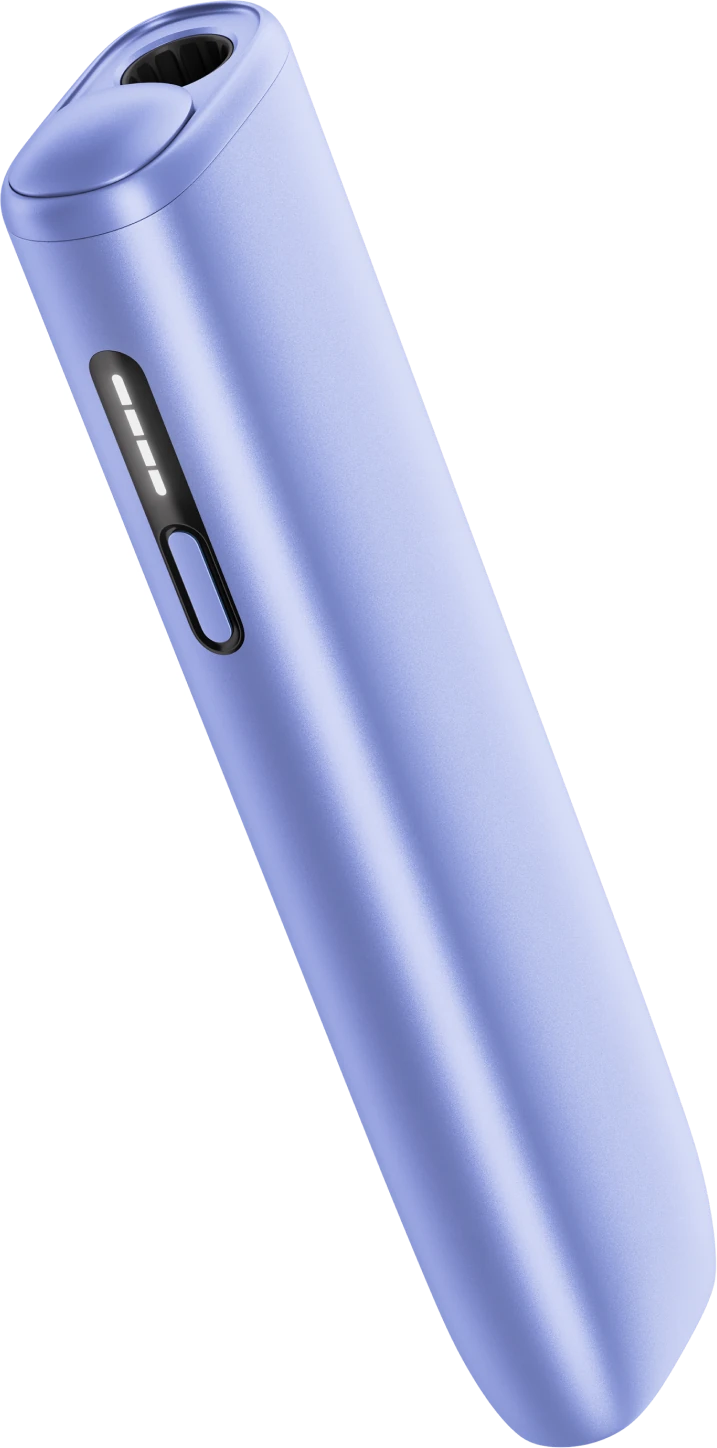
Whether IQOS is less harmful than smoking is the question we're asked most, and it deserves a straight answer rather than a sales pitch. The short version is this: switching completely from cigarettes to IQOS reduces your exposure to many harmful chemicals, but it has not been shown to reduce your risk of disease, it is not risk-free, and quitting nicotine altogether is far better than either.
The rest of this page explains where each part of that answer comes from.
The short answer, in four lines
- Exposure: lower. Studies measure much lower levels of many harmful chemicals in heated tobacco aerosol than in cigarette smoke.
- Risk of disease: not shown to be lower. The US FDA did not authorise that claim.
- Nicotine: still there, and still addictive.
- Best option: quitting completely.
What the FDA allowed in 2020, and what it refused
In July 2020, the US Food and Drug Administration issued orders letting Philip Morris market an earlier IQOS system, IQOS 2.4, and its tobacco sticks as "modified risk tobacco products" with a reduced-exposure claim. The authorised wording says that the IQOS system heats tobacco but does not burn it, that this significantly reduces the production of harmful and potentially harmful chemicals, and that studies have shown switching completely from cigarettes significantly reduces the body's exposure to those chemicals.
What the FDA did not do matters just as much. Philip Morris had also asked to claim reduced risk of disease, and the FDA did not authorise that claim. The orders also don't allow the company to suggest the products are endorsed by the agency. In April 2026 the FDA renewed those exposure orders for the older IQOS 2.4 and IQOS 3 devices and some of their sticks, and its announcement repeated that there is no safe tobacco product.
None of these orders covers ILUMA. You can see the full record on the FDA's page for the IQOS applications.
What WHO says
The World Health Organization takes a firmer line. In its July 2020 statement, WHO said that reducing exposure to harmful chemicals in heated tobacco products does not render them harmless, nor does it translate to reduced risk to human health. It pointed out that some toxins are present at higher levels in heated tobacco aerosol than in cigarette smoke, with unknown health implications, and that claims of reduced exposure may be misleading. WHO's position is that heated tobacco products are harmful, and it does not endorse them as a way to quit. Its recommended route is stopping all tobacco use with proven support.
What studies have broadly found
Without overstating any single study, the research picture so far looks like this:
- Lower levels of many measured chemicals. Laboratory studies, by Philip Morris and by independent researchers, generally find much lower levels of many harmful and potentially harmful chemicals in heated tobacco aerosol than in cigarette smoke.
- Not lower for everything. Some independent analyses have found certain substances at higher levels in the aerosol than in smoke, which is the point WHO highlights.
- Lower markers of exposure in people who switch completely. Studies of smokers who switched entirely showed lower levels of markers of exposure in the body. That is the evidence the FDA accepted for its exposure claim.
- No long-term disease data. Heated tobacco is too new for studies tracking whether switchers get fewer smoking-related diseases over decades. That is the gap between "reduced exposure" and "reduced risk".
- Dual use undermines it. People who use heated tobacco and keep smoking cigarettes don't get the exposure reduction that complete switching does.
What isn't known
- Whether lower exposure turns into fewer heart attacks, cancers or lung diseases over a lifetime.
- The long-term effect of chemicals that appear at higher levels in heated tobacco aerosol.
- The effect on bystanders over years of indoor exposure; our guide to secondhand aerosol covers what has been measured.
- Whether results from older IQOS devices carry over exactly to newer systems like ILUMA.
What this means for you
Put the evidence together and a clear order of choices emerges:
- Quit nicotine completely. This is the only choice with proven, large health benefits. Free help: the National Tobacco Quit Line (1800-112-356) and mCessation (a missed call to 011-22901701). Our quit smoking guide explains nicotine replacement therapy and prescription options.
- If you won't quit, don't keep smoking alongside anything else. Dual use keeps you exposed to cigarette smoke.
- If you switch, switch completely. Complete switching to heated tobacco reduces exposure to many harmful chemicals. It is still not risk-free, and it hasn't been shown to lower your risk of disease.
The IQOS ILUMA i ONE is not a quit-smoking aid, and we don't sell it as one. For how the options rank more broadly, see our honest guide to healthier alternatives to smoking, where quitting and medical treatments come first.
Questions
Did the FDA say IQOS reduces the risk of disease?
No. In July 2020 the FDA authorised a reduced-exposure claim for an earlier IQOS system and did not authorise a reduced-risk claim.
Does the FDA order cover IQOS ILUMA?
No. The 2020 order and its 2026 renewal cover older IQOS devices, not ILUMA.
What does WHO say about IQOS?
WHO says heated tobacco products are harmful, that reduced exposure does not mean reduced risk, and it does not endorse them as a way to quit.
Is IQOS risk-free?
No. It is not risk-free, and TEREA contains nicotine, which is addictive.
What is the best thing a smoker can do?
Quit nicotine completely, ideally with support such as NRT, prescription medicine or the National Tobacco Quit Line on 1800-112-356.